Tuesday, April 23, 2013

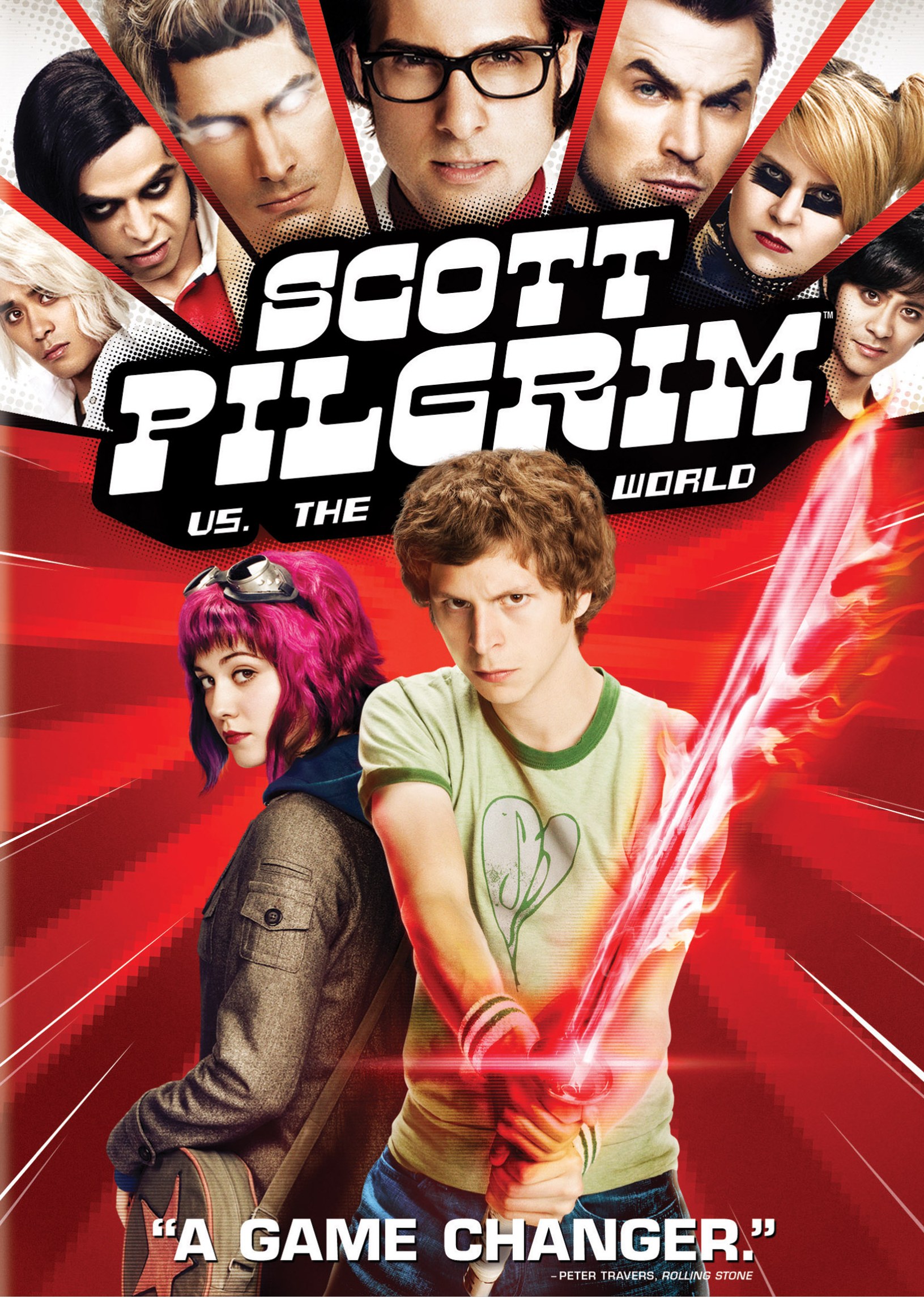
Scott Pilgrim vs. The World

Scott Pilgrim vs. The World (2010) is based on the graphic novel series Scott Pilgrim by Bryan Lee O'Malley. Scott Pilgrim, bassist for the Canadian band Sex Bob-omb, learns that in order to date the literal girl of his dreams, he must first defeat her seven evil exes in combat. The film follows Scott's struggle to overcome the exes, paralleling Sex Bob-omb's advancement through a Battle of the Bands, which turns out to be sponsored by Ramona's final evil ex. Scott relies heavily on his friends to help him overcome these obstacles, and ends up learning important lessons about himself and the world. 

With a background heavily influenced by comics and video games, this film makes extensive use of special effects throughout. The creative cuts and editing style of the film allow it to retain some of the feel of the graphic novel, using things like block text biography labels to introduce characters, and score pop-ups with the defeat of each evil ex. The film uses the Gaze in an almost off-handed way to place the audience in Scott's emotional position for crucial moments in the story. The film also flaunts a blatant disregard for temporal and spatial continuity, applying the comic book laws of physics and human capability.

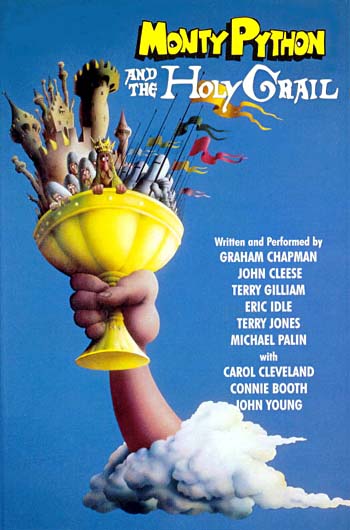
Monty Python and the Holy Grail

Monty Python and the Holy Grail (1975) is considered to be the first “proper” film by the British comedy troupe Monty Python, as it was a standalone concept, unlike the compilation of sketches released as the first film. This film is a unique take on the tale of King Arthur, and follows Arthur's quest to find the Holy Grail. The film has a heavy dose of Monty Python tomfoolery, and includes such shenanigans as breaks to modern day inserts within the world of the film, such as the ongoing police investigation, the refusal to enter Camelot because it is “a silly place”, and continuous fighting spirit of the Black Knight even after he loses his limbs.

Because of Monty Python's sketch background, this film relies on physical and verbal comedy rather than fancy effects or camera angles. Because the film was written, directed, and produced by members of the troupe, they were able to take heavy creative license with the film and the filming, including the aforementioned breaks to modern day characters, or the use of coconuts on-screen as the Foleyed effect of a horse's hooves. An added benefit of keeping the film within the oversight of the troupe meant that the film went from concept to final cut without outside influence or editing, allowing it to remain true to the troupe's original idea.

Jaws

Jaws (1975) is considered by many to be the first summer blockbuster. Directed by Steven Spielberg, the film chronicles events in the town of Amity after the body of a shark attack victim is discovered. Concerned that knowledge of the attack will cost Amity the summer tourist dollars, the lifeblood of the town, the town leaders decide to pass the attack off as a boating accident. Sheriff Martin Brody argues against the cover-up, but, lacking the power to fight the town leaders, allows the paperwork to be altered. After the death of another person, a reward is offered for the capture of the shark, leading to a flood of would-be shark hunters. Quint, a local shark hunting expert, offers up his services for ten grand, but is rejected until an attack on the 4th of July, and Brody, Quint, and Matt Hooper, a marine biologist specializing in sharks, set out to end the shark's reign of terror.

Jaws is single-handedly responsible for propelling Spielberg up to the big kid's table in Hollywood, and is still one of the most iconic movies of all time. The steady build of suspense through the use of camera angle, focusing, and the well known Jaws theme keeps the audience on the edge of their seats throughout the film. The movie becomes even more impressive when the fact that a large portion of it was shot “out at sea”, utilizing other boats to mount cameras on. It is also interesting to note that Jaws is classified as a horror/thriller film, which it certainly was for its time, although the definitions of genres have changed drastically since then.

Tuesday, April 2, 2013

The Princess Bride

The Princess Bride (1987), directed by Rob Reiner, is an adaptation of the 1973 novel of the same name, which provided an original take on classic fairytale structure, told as a story within a story. The film begins with a grandfather coming to read his sick grandson a story. The grandson is excited until he discovers that it is a love story, but agrees to suffer through it if his grandfather skips “all the kissing stuff”. The film then shifts primarily to the inner story, framed by the grandfather reading, following the story of Westley and Buttercup, two lovers torn apart by the supposed death of Westley at the hands of the Dread Pirate Roberts. Years later, believing Westley to be dead, Buttercup agrees to marry Prince Humperdink of Florin, but is kidnapped by a Sicilian boss and his henchmen to provoke a war between Guilder and Florin. Along the way she is stolen away by the Dread Pirate Roberts, who reveals himself to be Westley in disguise, before she is taken back by Humperdink. Together with Inigo Montoya, a master fencer, and Fezzik, a Turkish giant, Westley attempts to rescue Buttercup before it is too late.

This film makes a very effective use of soundscape and the Gaze to emphasize the story. Creative blocking and camera techniques allow for some truly incredible scenes. Since its release, the film has become somewhat of a cult classic in America, with Inigo Montoya becoming a household name because of his famous repeated line: “My name is Inigo Montoya. You killed my father. Prepare to die.” The story within a story structure worked especially well for this film, providing a framework to tie the whole thing together, and moments of realism in an otherwise fantastical tale.